Interview with Miguel Angel Hernández of the Socialism and Freedom Party (PSL)
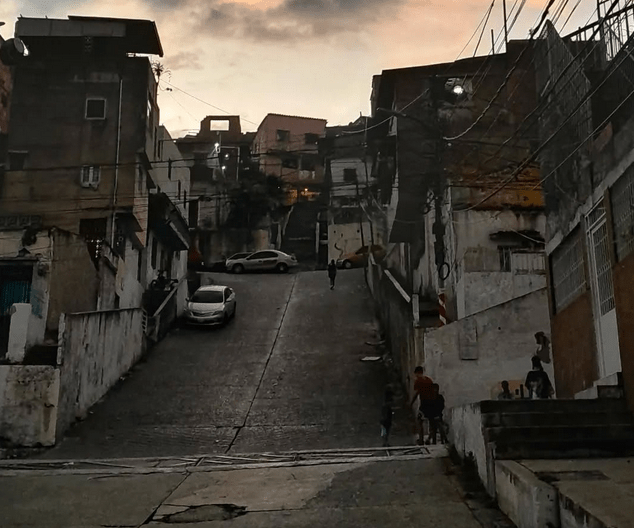
Picture: View of Los Magallanes de Catia, Oswaldo Pacheco
What is the popular perception in Venezuela of US military threats? Is it a central concern for most people or is popular attention more focused on other issues?
There is undoubtedly a real threat from US imperialism, led by the far-right Trump, in the Caribbean and the Pacific, focused on Venezuela but also directed at Colombia and, to a lesser extent, Mexico and the Caribbean islands, all under the pretext of the fight against drug trafficking. This is a false argument, given that Venezuela is not an important drug-producing and distributing country, but rather a transit zone, as it has historically been. Under this false pretext, serious threats are directed against the country and against Latin American and the Caribbean, following a long tradition of aggression and military intervention in the region.
The issue is discussed in political and social circles, but it is not a popular topic that people are concerned about or discuss much in the streets, markets, or on public transportation. It is not a widespread debate among the popular sectors. The central issue today is the problem of inflation. The country experienced several years of hyperinflation, and since September last year we have seen a monetary devaluation that is reflected in the accelerated rise in the exchange rate of the US dollar, and of course this has a negative impact on inflation. There is a danger of going through another period of hyperinflation. It would be unprecedented in the contemporary global economy for a country to go through two cycles of hyperinflation in such a short period of time. There is no hyperinflation yet, but we could move in that direction.
The central issue is the cost of living, the price of food, in a country with very low wages. The minimum monthly wage since 2022 is 130 bolívares, which at the current exchange rate is about half a dollar, a miserable wage. That is the real concern for most Venezuelans.
Imperialist threats undoubtedly pose a serious problem for the country. This is a military deployment that has not been seen in the region for many years, perhaps since the invasion of Panama. Under the pretext of combating drug traffickers, the Trump administration has already bombed several boats in the Caribbean and killed more than 70 people, murdered in international waters in a totally illegal manner, instead of arresting them and presenting them to courts of justice.
Undoubtedly there are divisions in the Venezuelan population regarding these imperialist threats. It’s important to note that a large segment of the population would mistakenly agree with US intervention, while another sector views it with indifference. There is an explanation for this: it is due to the widespread repudiation of the Maduro government, which makes any action that damages the government look favorable. This is a consequence of the situation created by the government with its extreme austerity measures, starvation wages, and repression of all dissident. All of this has generated social unrest in the country, which is expressed in this attitude of indifference and, in some cases, even support for a possible military intervention that would mean Maduro’s removal from power.
We, from the Socialism and Freedom Party (PSL), have been arguing that in order to overcome this real division that exists within the Venezuelan people and to unify the working class against a possible military attack on our country, the government must break all economic ties with imperialism, terminate joint venture contracts in the oil sector with imperialist companies such as Chevron, Shell, and Sunergon Oil, which has just entered the country, among others. While warships are being deployed in the Caribbean, the Venezuelan government continues to grant concessions to US transnational corporations. We say that we must affect the economic interests of imperialism and expel these companies, as well as imperialist companies in sectors such as finance, telecommunications, oil services, etc. Similarly, we demand the immediate release of all political prisoners who reject any kind of imperialist intervention in Venezuela, such as former presidential candidate Enrique Márquez. We demand the legalization of left-wing parties such as ours, Marea Socialista, the Communist Party, and other left-wing and democratic organizations that reject any imperialist interference.
How can Venezuelans defend their country if they feel injured by the government’s austerity measures, with terrible wages, no collective bargaining, terrible public services, and thousands of people imprisoned or under precautionary measures? To achieve the necessary anti-imperialist unity of the Venezuelan people, the aforementioned measures are urgently needed.
The government has spoken of an alleged economic recovery, trying to popularize the slogan “Venezuela was fixed.” What is the economic reality of the working class?
People scrape by doing other activities besides their formal jobs. Those who have a vehicle or motorcycle work as taxi drivers or couriers, preparing food to sell, repairing electric appliances or clothing, or doing any activity that allows them to supplement their family income in order to meet their daily needs for food or transportation. Many rely on remittances.
This has been the constant drama for Venezuelans for at least a decade, first due to the major economic crisis that the country has been experiencing since 2014, due to the brutal economic adjustment that the government is applying, which in 2018 it renamed as the Program for Recovery, Growth, and Economic Prosperity and accompanied with two measures that have been detrimental to the people’s standard of living: the so-called instruction from the National Budget Office and Memorandum 2792 issued by the Ministry of Labor, which in effect liquidated wages and canceled collective bargaining discussions. These measures have favored turning wages into bonuses, with employers paying a bonus in dollars that can range from $100 to $250 a month, but which is not taken into account for vacation pay, social benefits, and other benefits that workers previously received as part of their salary income.
What is the situation of the popular movement and the working class after the 2024 post-election repression?
Following the protests on July 29 and 30, 2024, in response to what thousands of people from the working classes considered to be an electoral fraud perpetrated by the government, there was a brutal repression that led to more than 2,000 people being imprisoned, mostly young people from the working class sectors that had traditionally been the social base of Chavismo. This represented a qualitative change: it was not the middle classes who took to the streets, but the working class in the barrios of Caracas and other cities across the country who reacted against what they considered to be electoral fraud. There were many deaths and thousands of people injured, and since then there has been a decline in working-class and popular mobilization.
We believe that we must continue to insist that the only way to defeat the government is through mobilization and struggle, taking the necessary precautions, not by listening to the siren calls of imperialism or waiting for a messiah from abroad to come and save us, as proposed by some sectors of the Venezuelan bourgeois opposition led by María Corína Machado, who has taken a truly shameful position, promoting military intervention in our country and applauding Trump’s military deployment in the Caribbean, saying that Venezuela is a danger to the region and to the US.
We do not believe that this is the way forward. Rather, it is through the mobilization of workers and the people that we will be able to defeat Maduro’s government and its anti-popular policies.
In the last four years, most left-wing organizations have broken with the government. What spaces for coordination exist within the Left?
The left is greatly diminished, deeply affected after years during which most of it supported Chávez and Maduro. In recent years, most of the organizations that supported Chavismo have broken away from the government. The most emblematic case is that of the Communist Party, which was the last left-wing party with legal and electoral representation, and the government took that away. There are other left-wing organizations in opposition to the government, such as the PPT-APR led by Rafael Uzcátegui, Socialist Tide, Communist Revolution, the League of Workers for Socialism, and of course our party, the Socialism and Freedom Party (Partido Socialismo y Libertad). In our case, we have for many years confronted the government, opposing both Chávez and Maduro from the revolutionary left.
There are few mass struggles, however, there is a vanguard that has continued to mobilize against corruption, for better wages, for the freedom of political prisoners, in support of the Palestinian people and against the Israeli genocide in Gaza. This Left has been coming together for three years in a space called the National Encounter in Defense of the Rights of the People, through which we have been carrying out activities and mobilizations in the streets on these issues. This coordination is made up of the organizations already mentioned, and others take part in its mobilizations such as the Popular Alternative Movement, led by Manuel Isidro Molina, the Popular Historical Bloc, and Comunes, the latter two coming from Chavismo. Another coalition is the National Committee of Workers in Struggle, which is union-based, in which we also participate through our union movement C-cura, led by Orlando Chirino and José Bodas. In the interior of the country, the situation is more difficult, but in Caracas, activities have been carried out more or less permanently. Incidentally, the National Committee of Workers in Struggle will hold an event in defense of wages and other labor rights on December 4 at the Central University of Venezuela. C-cura will participate, insisting on the need to mobilize, to discuss a national plan of struggle, and fight for an emergency Workers’ and People’s Plan.
 Venezuelan Voices
One thought on “Venezuelan socialists reject Trump’s threats without supporting Maduro”