
Organizations
We, the undersigned civil society organizations, human rights defenders, and environmental advocates, address the national and international community to warn of the grave threat posed by the new Organic Mining Law draft currently under discussion.
This law is part of a long-standing context of systematic violations of social and environmental rights, disregard for the Constitution and the current legal framework, and the adoption of harmful regulations—such as the Anti-Blockade Law—that have deepened the country’s environmental and social devastation.
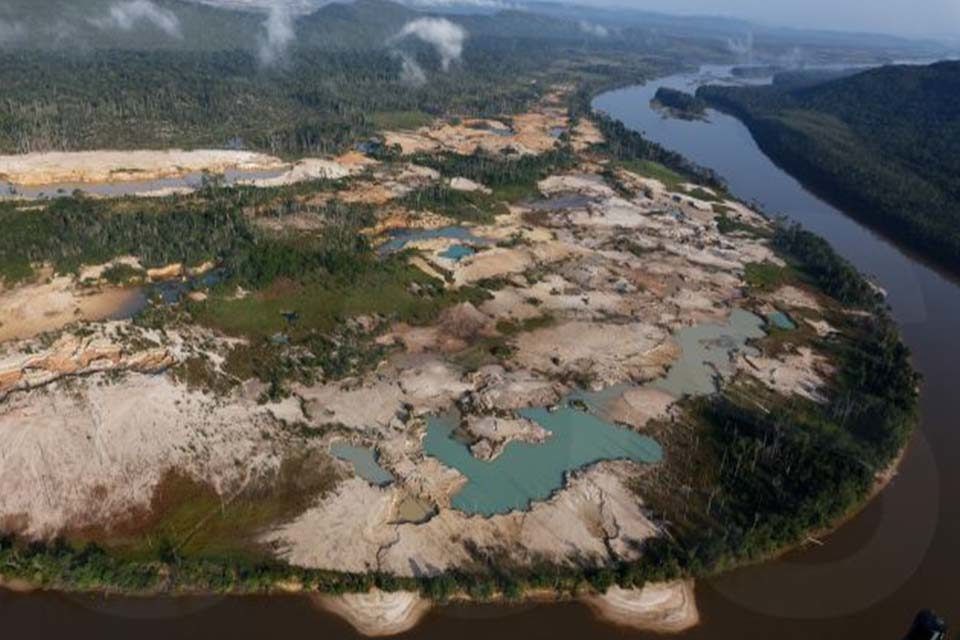
We denounce that this legal and political framework, rather than serving as a regulatory instrument for control and transparency, will merely provide a veneer of legality to the current systematic plundering of the Amazon and the Guayana Shield, thereby exacerbating the severe environmental degradation and human rights violations currently taking place.
In this regard:
- We categorically reject the term “Ecological Mining Development” introduced in Article 8 of this draft law. From a scientific and ethical perspective, gold mining is inherently destructive. This concept has only served to conceal the destruction of biodiversity and watersheds under a false promise of sustainability that does not exist in current extractive practices anywhere in the world.
- We oppose the increase in discretion and opacity. The bill, as presented in Articles 4, 10, 11, and 17, grants the National Executive absolute discretion and confidentiality criteria regarding regulation, the granting of mining titles, and oversight, as well as in the designation of “Strategic Minerals.” This will create opacity in operations, impede public scrutiny and citizen participation, particularly among the communities where mining operations will take place.
- We warn of the grave risk of exacerbating environmental damage in the Venezuelan Amazon region. In the bill, the treatment of environmental issues is primarily declarative and contains significant regulatory and environmental governance gaps. In particular, although it mentions Environmental Impact Assessments, it does not explicitly establish them as a requirement for granting concessions and other types of contracts; it incorporates the idea of territorial exclusion from mining exploitation, but these are dependent on Land Use Plans which, in Venezuela, when they exist, are severely outdated; although it requires companies receiving concessions to avoid environmental damage and compensate for any harm caused, its approach is based on liability after the fact rather than on prevention criteria; it does not establish financial guarantees for restoration. Likewise, it fails to establish a regime for mine closure and regulation of mining waste, or to define mechanisms for independent environmental supervision such as environmental monitoring systems, public access to environmental data, and independent audits; nor does it provide for the creation of an environmental remediation fund, which would be non-deductible from taxes or royalties.Nor does it mention mechanisms for mitigating greenhouse gas emissions, such as emissions monitoring and control, efficiency plans, and energy transition plans.
- We note the potential violation of Protected Areas. Although the text excludes National Parks and Natural Monuments from the areas where mining concessions may be established, this exclusion does not extend to other protected areas such as Biosphere Reserves, Protected Zones, and Forest Reserves. Therefore, respect for land-use planning must be extended, and environmental impact studies and assessments of the ecological status of all these territories must be updated to ensure not only their protection but also the updating and strengthening of existing measures.
- We consider that the proposed bill is detrimental to the rights of indigenous peoples in the areas where mining activities will take place. Although it establishes that the exploitation of resources in “indigenous habitats” must include prior information and consultation with indigenous communities, it fails to address these peoples’ right to the demarcation of their territories and does not mention free, prior, and informed consent, which is the current international standard.
- We reject the militarization of the territories where mining concessions will be granted. The creation of the “National Mining Reserve” (Articles 13 and 14) under the control of the Bolivarian National Guard formalizes military control over extractive zones. The military presence in mines has historically been associated with human rights violations, corruption, and the creation of hybrid governance structures.
- We object to the designation of this Law as an organic law. In Venezuela, the designation of laws as organic without justification has only served to confer a supposed hierarchy that allows for the circumvention of other organic or ordinary laws, such as those pertaining to environmental issues or the protection of human rights.
Based on the above reasons, we believe that the National Assembly should pause discussion of the Law to allow for the incorporation of the following aspects:
- Incorporate explicit mechanisms for transparency and public information regarding all administrative processes, from the authorization and operational processes of companies engaged in mining activities as defined by the Law.
- Explicitly acknowledge the constitutional obligation to conduct Environmental and Sociocultural Impact Assessments for all mining projects, as required by Article 129 of the National Constitution.
- Include mechanisms for environmental control, monitoring, and assurance that guarantee the development of robust environmental management systems in all mining operations in accordance with the highest international standards of environmental responsibility and human rights protection.
- Incorporate into the Law a human rights framework to guide mining activities in accordance with international standards in this area. This must include processes that guarantee fair, equitable, and transparent benefits for indigenous communities in areas under exploitation.
- Establish security mechanisms that guarantee the protection of the human rights of all affected communities, including the involvement of the Armed Forces exclusively in tasks determined by the Constitution and the law.
- Establish a legal framework of strict standards for environmental control and industrial and occupational safety, with public and open inspection, to ensure proper investment in and maintenance of waste containment, environmental remediation and mitigation, and occupational safety equipment; in order to reduce the risk of accidents in mining areas.
- Urgently establish a regulatory framework that obligates the National Executive to implement ecological restoration and damage remediation plans, guaranteeing the right to reparations for populations harmed by mining operations.
Finally, legislative changes in Venezuela will only make sense if they occur within a process of deep respect for the Constitution and Venezuela’s existing comprehensive environmental regulations, as well as a return to democracy and the strengthening of institutions.
Venezuela’s gold is not worth the lives of our rivers, forests, and communities.
The following organizations endorse this statement:
- SOSOrinoco
- Provea
- Clima21
- AC Chunikai
- Observatory of Political Ecology of Venezuela
- Civilis
- Aguaclara Foundation
- ECOVITA Foundation
- Hoffmann Integral Health Foundation
- Collective Memory Foundation Venezuelan-German Institute of Applied Ecological Sciences (IVACEA)
- SER Movement
- Fundaredes
- Human Development Laboratory
- Human Rights Network in Action
- Autonomous Indigenous University – Wainjirawa
Caracas, Venezuela, March 23, 2026
Original in Spanish published by OEP
 Venezuelan Voices